Financing Your Myrtle Beach Home Purchase
Two numbers decide what you can buy: the cash you have available, and what the house costs you every month.
When it's all said and done, the two most important numbers when considering a home purchase are the cash you have available for a purchase, and the total ongoing monthly cost you'll incur.
Cash for Purchase & Loan Programs
The amount of cash you have is the single most important factor determining the loan programs that are available to you. You'll need cash to cover a loan downpayment and closing costs to purchase a home. The minimum loan downpayment is set by the loan program you choose.
Closing Costs
Closing costs typically run to around 2% of a home's purchase price, on top of your downpayment. The largest single items are usually the lender's administration or origination fee, a full year of homeowners insurance plus three months into escrow, a year of property taxes funded into escrow, owner's title insurance and prepaid interest.
One point worth knowing if you are moving from another state: in South Carolina the state deed transfer tax is paid by the seller, not the buyer. Buyers arriving from markets where it is split, or borne by the purchaser, often budget for a cost they will not face.
You should always consult with a loan officer on the specifics of loan programs. To get started, here are a few common strategies to finance a purchase based on your cash situation. Once you pick your loan program and mortgage provider, get the very best loan approval letter possible to help negotiate the best deal on a purchase.
You Have Access to Lots of Cash
Conventional Loan Financing 80%. Short of paying cash, this is normally the best option giving you the best rates and lowest monthly loan costs. For a $400,000 purchase as an example, you would need around $88,000 at settlement to cover the downpayment and closing costs. Monthly payments would be based on a $320,000 mortgage. Advantages of this strategy compared to others:
- Readily available loan program available by most (all?) lenders giving you the best interest rate
- Lowest monthly mortgage payment with no mortgage insurance, best rate, and lower loan balance
- If in competition with another buyer who has a lower downpayment, your offer is stronger (with all other things being equal).
You Have Most Cash Now with More Coming Soon
You would like to put 20% down now to get the best loan terms, but you need additional cash that will be available soon (sale of another property, bonus, investment, etc.).
Conventional Loan + 2nd Trust. Get two loans: a primary mortgage financing 80% and a "second trust" at 10%. Once you receive additional cash after your purchase, payoff the 2nd trust. For a $400,000 purchase, you would need around $48,000 at settlement.
- Best rate on the 1st trust, but rate on the 2nd trust will be higher
- No mortgage insurance on the 1st trust, but you'll pay interest on the 2nd trust increasing your monthly mortgage costs
- Additional loan process charges (a few hundred dollars)
There are other strategies to get additional cash for a purchase.
- Gift from Family. It's not unusual to receive a cash gift from family. Your lender will have documentation requirements for gifted funds, so mention it early.
- Borrow from Retirement Account. This can be the easiest and lowest cost option to obtain cash for a short period of time.
- Home Equity Line for Current Home. Getting a Home Equity Loan on your current home (if you have a home to sell) or an investment property is a common way to get cash for a purchase.
You Have Limited Cash for Purchase
Consider other common loan programs if you don't have access to much cash for a purchase.
- Conventional Loan with 5 or 10% Down. These programs aren't as common, so you'll need to shop around. Expect rates to be higher and/or your monthly payment to include a mortgage insurance premium (MIP).
- Credit Union. Local credit unions tend to hold loans they originate, so they are positioned to offer programs found nowhere else. We've seen loans with great rates that require 5% or even 0% downpayments.
- FHA Loan. With a minimum down payment of 3.5%, this is the most common low-downpayment loan widely available. Rates can be competitive, yet an upfront Mortgage Insurance Premium (MIP) and monthly MIP inflate monthly payments creating a more expensive loan. An FHA loan is also a good match for buyers who have enough cash for a purchase, but whose low credit scores disqualifies them for a conventional loan.
- VA Loan. These are federally backed loans for veterans and active service members. These can be fantastic loans with low costs, low downpayments and great rates. Always consider a VA loan if you qualify – even if you plan to make a big downpayment.
- Seller Credit. Maybe you have enough cash for a downpayment, but cannot cover closing costs. You can negotiate a credit from the seller which pays for most of your closing costs. Note, however, this is not free money! A $10,000 seller credit on a $400,000 purchase is like a $390,000 offer to the Seller.
Monthly Costs
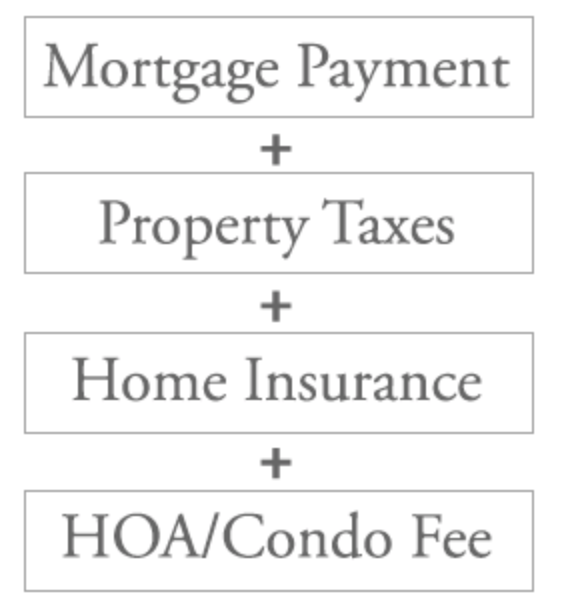
When budgeting monthly expenses for a home purchase, include the Mortgage, Taxes, Insurance, Home Owner's Association or Condominium Fees (if any). Here are some strategies to estimate and reduce each of these factors.
Reduce Monthly Mortgage
- Make a Larger Down Payment. Having a lower loan amount will result in lower monthly payments. This is obvious. What may not be obvious: making a larger downpayment may reduce or eliminate monthly mortgage insurance premium (MIP).
- Improve Your Credit Scores. For all loan programs, having the highest credit score will allow you to get the lowest rates. Now's the time to review your credit report. It's not uncommon for a report to have one or two small items which, if removed or paid off, can dramatically improve one's score. Your loan officer can obtain a report and advise on the items to address.
- Consider an Adjustable Rate. Adjustable rates will be less than a fixed rate mortgage, but many buyers avoid adjustable rate mortgages thinking they are too risky. If you believe there's a high likelihood of selling in five to seven years, then a 5/1 ARM can be an ideal program. With a 5/1 ARM the rate is fixed for the first 5 years and then it can adjust every year after that. Other variations have fixed rates for the first seven years or longer. ARMs may not be right for you, but check them out before you rule it out.
Other Monthly Fees to Estimate
Property Taxes. Most people are shocked when learning how low property taxes in Horry County are compared to other parts of the country. What matters most is whether the home is your primary residence or a second home, because the assessment ratio differs and primary residences are exempt from the school operating millage.
| $400,000 home, City of Myrtle Beach | Per year | Per month |
|---|---|---|
| Primary residence (4%) | $2,328 | $194 |
| Second home or investment (6%) | $6,110 | $509 |
Based on 2025 City of Myrtle Beach millage. Rates vary by municipality — Surfside Beach and North Myrtle Beach are considerably lower, Conway and Loris higher. Once you find a specific home of interest, you can calculate the exact tax payment.
Insurance. Your mortgage provider will require home insurance. Costs vary based on coverage, provider, and location. The closer your home to the ocean, East of Hwy 17 Business in Myrtle Beach, the higher the premium. Coastal premiums have risen sharply over the past five years — budget $2,500 or more a year, which is roughly $210 a month on a typical property, and considerably more close to the water. Bear in mind a coastal home may also need separate wind and hail coverage and flood insurance.
HOA and Condo Fees. These are impossible to estimate given the wide range of fees. I can provide you with the exact fee for a property of interest. Note that condo fees can be very high even for very low-priced properties.
The figures on this page are estimates provided as general guidance. Loan terms, rates, taxes and insurance premiums vary by property, lender, carrier and location, and they change over time. Ashley DeLong is a REALTOR®, not a lender, tax advisor or insurance agent. Your lender's Loan Estimate and Closing Disclosure are the authoritative figures for your purchase.
Let Me Be Your Guide
The mistake I see most often is a buyer working out what they can borrow without working out what the house costs to run. Taxes and insurance are where the Grand Strand differs most from other markets, and a second home is taxed at more than twice the rate of a primary residence on the same property.
Since I work with local lenders on a daily basis I can point you to people who write in this market regularly and will give you a straight answer on what your monthly number actually looks like.
Let me be your guide to purchasing a home in Myrtle Beach. Please refer to my Buying a Home page for greater detail about my process of helping you purchase the perfect home at the best possible price.
Frequently Asked Questions
How much cash do I need to buy a home in Myrtle Beach?
It depends on the loan program. A conventional loan at 80% on a $400,000 purchase needs around $88,000 at settlement, covering the downpayment and closing costs. FHA requires as little as 3.5% down, VA can require nothing, and some credit unions offer 5% or even 0% down programs.
Who pays the transfer tax in South Carolina?
The seller. In South Carolina the state deed transfer tax is a seller cost, which surprises buyers moving from states where it is split or paid by the purchaser.
How much are closing costs when buying in Myrtle Beach?
Around 2% of the purchase price, on top of your downpayment. The largest items are usually the lender's administration or origination fee, a full year of homeowners insurance plus three months into escrow, a year of property taxes into escrow, owner's title insurance and prepaid interest.
How much will property taxes be each month?
On a $400,000 home in the City of Myrtle Beach, roughly $194 a month as a primary residence at the 4% rate, or roughly $509 a month as a second home at the 6% rate. Rates vary by municipality.
Is an adjustable rate mortgage a good idea?
It can be. Adjustable rates are lower than fixed, and if there is a high likelihood of selling within five to seven years a 5/1 ARM can be ideal. The rate is fixed for the first five years and adjusts annually after that. Worth checking before you rule it out.
Is a seller credit free money?
No. A $10,000 seller credit on a $400,000 purchase is effectively a $390,000 offer to the seller. It is a useful tool when you have the downpayment but not the closing costs, but it is not a discount.
Let's work together.
Want a straight answer on what a specific home would cost you monthly? Ashley DeLong can run the numbers before you fall for a house.
Contact Me! Call AshleySign Up For An Account Today!
Get access to real-time updates as listings hit the market by signing up now. By signing up early in the process, you maximize your chances of landing your ideal home, condo, or villa. Your account enables you to:
- Save searches based on your criteria.
- Receive market updates and price drops.
- Create custom predictive market reports.


